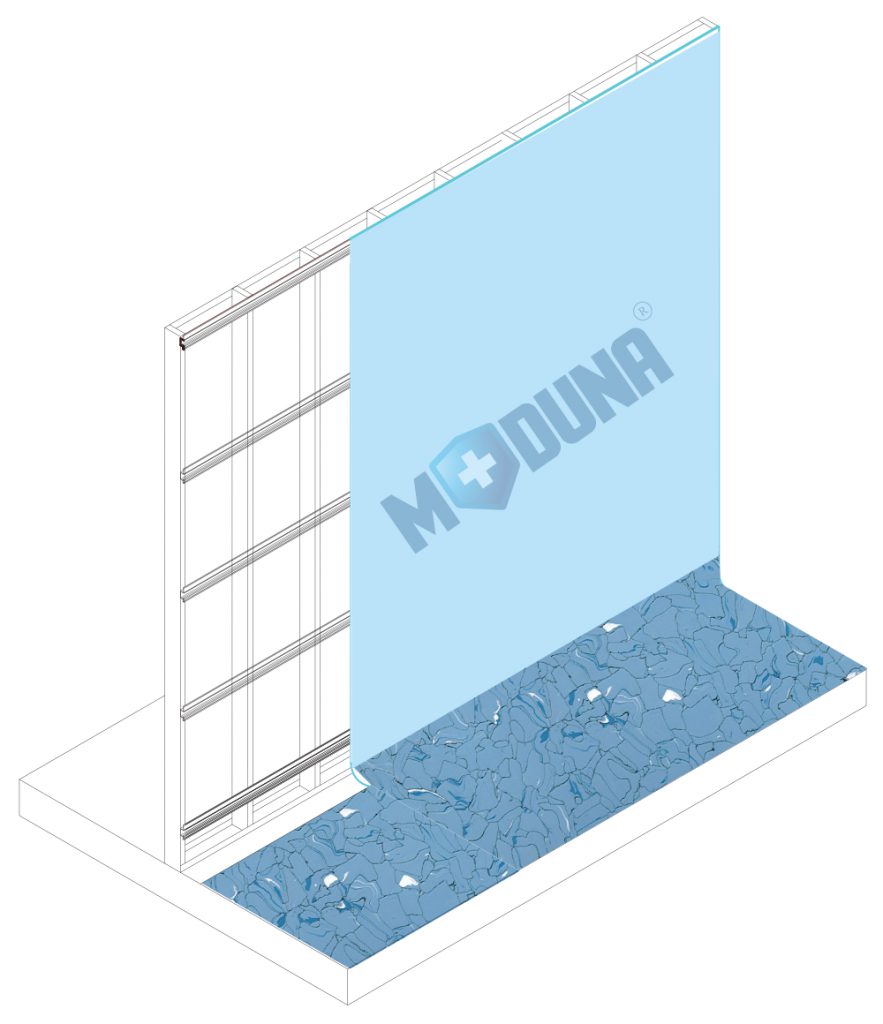




How to Install Using the Clip Lock Method
This guide describes the installation process for MODUNA Compact Laminate wall panels using the Clip Lock system. These panels are widely used in environments requiring strict hygiene and cleanliness standards, such as operating rooms, cleanrooms, and other controlled medical spaces.
Overview
Modern healthcare facility design demands advanced materials and systems that support stringent infection control and operational safety. To meet these needs, MODUNA Compact Laminate (LAB GRADE) is selected for its durability and performance.
These wall panels are ideal for sterile environments because they are:
- Highly impact-resistant
- Anti-bacterial surface
- Static-free
- Chemically resistant to mild agents commonly used in medical settings
- Fire-tested to UL94 Vertical Burning Test, Class V0
- Resistant to mold and surface degradation
Components Used in Clip Lock Installation
- MODUNA Compact Laminate Wall Panels (LAB GRADE)
These panels are engineered specifically for sterile environments. They exhibit excellent mechanical strength and chemical resistance, making them suitable for operating rooms, ICU areas, laboratories, cleanrooms, and other controlled spaces.
- Clip Lock Wall System Framework
A prefabricated steel stud system with Clip Lock fasteners is used. This system allows for secure, seamless installation without penetrating the panel surface with screws, enhancing cleanliness and ease of maintenance.
Installation Notes
- Panel Thickness:
Panels should be at least 8 mm thick for Clip Lock installation to ensure adequate rigidity and performance in sterile settings. - Joint Sealing:
Use Seal N Flex 1 Class A polyurethane sealant for all panel joint areas, compliant with DIN18540 (Germany) / SNJF (France) ISO 11600 standards.
This sealant remains flexible and resilient, accommodating up to ±25 % movement in joint width. - Best Practices:
- Panels should be installed only by qualified professionals familiar with controlled environment construction standards.
- Avoid puncturing the laminate surface during installation.
Doors designed for operating rooms or cleanrooms are also commonly referred to as Airtight Doors.
In simple terms, an Airtight Door is a door system that is specifically engineered to prevent uncontrolled air leakage in and out of the space, allowing effective control of air pressure, temperature, and humidity within the operating room or cleanroom environment.
For operating room applications, two main door configurations are commonly used.