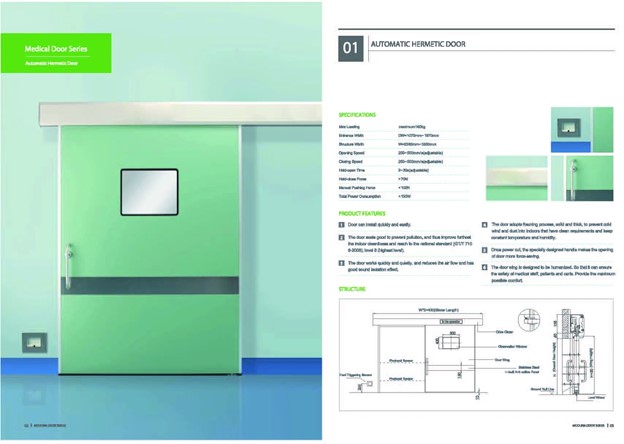




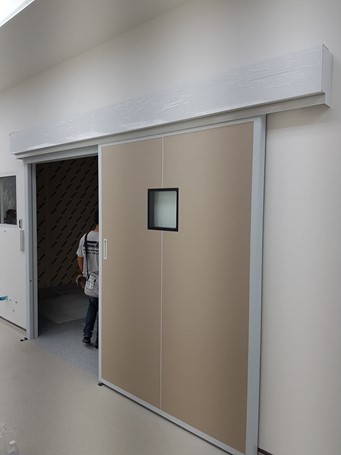
According to international standards, the door for an operating theater — known as a Hermetic Door — must be a fully sealed automatic sliding door designed to control air movement and prevent air leakage. The system should include a touch-free opening and closing mechanism, such as switches that do not require direct contact (e.g., elbow, foot, or non-contact switches). These features help reduce noise and contribute to infection control within the space, similar to the requirements applied to operating room walls.
The operating theater door is typically operated by pushing with an arm or body — without direct hand contact — to open or slide the door. The clear opening width should be no less than 1.50 meters, and the door should include a vision panel to view into the room. The design must minimize air leakage in order to maintain precise temperature and air pressure control inside the operating theater.
The surface of the Hermetic Door must consist of materials that:
- Inhibit mold growth
- Reduce static electricity
- Are easy to clean and disinfect
- Resist corrosion
- Prevent condensation and droplet formation (which could lead to contamination)
The Hermetic Door system (air-tight sliding door) plays a critical role in reducing the risk of infection transmission to other patients, the patient undergoing surgery, and healthcare staff.
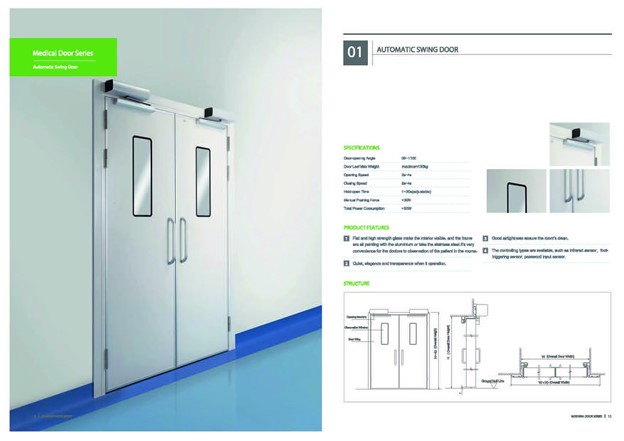
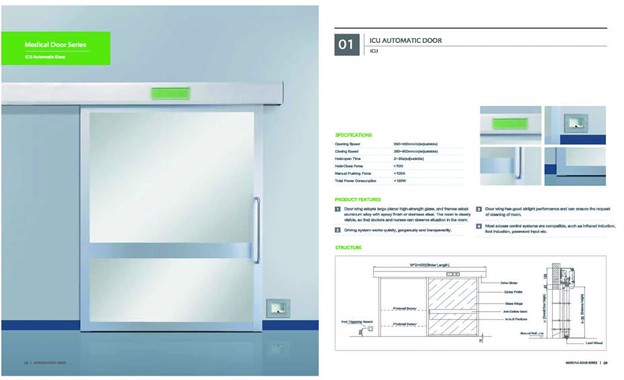
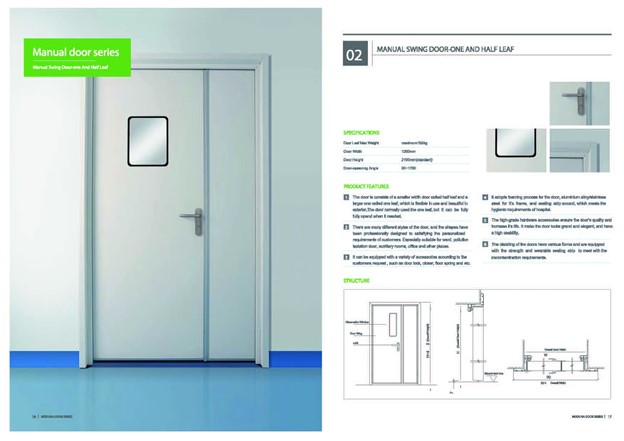
There are different types of Hermetic Door configurations available, including:
- Sliding doors
- Swing-type doors
The choice depends on:
- The specific space requirements,
- The desired user convenience, and
- The level of air-tightness needed for the room’s environment.